


Energy is the foundation of milk production, reproductive health, immunity, and overall performance in dairy animals. During high production stages—especially after calving—many dairy cows and buffaloes experience a serious shortage of energy, leading to metabolic disorders that directly impact productivity.
One of the most common and costly metabolic problems in dairy farming is Ketosis, often associated with Negative Energy Balance (NEB).
If not managed properly, energy deficiency can result in low milk yield, weight loss, weakness, poor fertility, reduced appetite, and long-term health complications.
The key to preventing these problems is rapid energy restoration, liver support, and metabolic balancing through scientific nutritional management.
What Is Energy Deficiency in Dairy Animals?
Energy deficiency occurs when a dairy animal’s body requires more energy than it receives from feed intake.
This is especially common during:
✔ Early Lactation – when milk production starts rapidly after calving
✔ Post-Calving Recovery Period – when nutritional demand is very high
✔ Peak Milk Production Stage – when animals produce maximum milk
When energy demand exceeds energy intake, the animal enters a condition called Negative Energy Balance (NEB).
Signs of Energy Deficiency in Dairy Animals
Energy shortage often leads to:
✔ Reduced milk production
✔ Weight loss and body weakness
✔ Poor appetite / reduced feed intake
✔ Low body condition score
✔ Sluggish behavior
✔ Poor reproductive performance
✔ Increased disease susceptibility
If ignored, this may progress into Ketosis and Fatty Liver Syndrome.
Understanding Ketosis in Dairy Animals
Ketosis is a metabolic disorder caused by excessive breakdown of body fat for energy.
When this happens:
- Fat reserves mobilize rapidly
- Liver converts fat into ketone bodies
- Ketones accumulate in blood
- Appetite drops further
- Energy crisis becomes worse
This creates a dangerous cycle that reduces production and delays recovery.
Common Symptoms of Ketosis
Watch for these warning signs:
✔ Sharp drop in milk production
✔ Sweet / acetone-like smell in breath or milk
✔ Reduced appetite
✔ Rapid body weight loss
✔ Lethargy / weakness
✔ Dull coat condition
✔ Reduced fertility performance
Early nutritional intervention is essential.
Major Causes of Energy Imbalance in Dairy Animals
1. Negative Energy Balance (NEB)
This is the most common cause.
Energy demand (milk production) > Energy intake (feed consumption)
This imbalance is especially common immediately after calving.
Impact:
- Rapid fat mobilization
- Ketosis risk increases
- Weak body condition
- Lower milk output
2. Poor Feed Intake
Reduced Dry Matter Intake (DMI) limits energy availability.
Reasons include:
- Heat stress
- Illness
- Digestive disturbances
- Poor-quality fodder
- Sudden ration changes
Lower intake means lower energy supply.
3. Glucose Deficiency
Unlike humans, ruminants rely heavily on gluconeogenesis—the production of glucose in the liver.
When glucose production becomes insufficient:
- Energy drops rapidly
- Fat breakdown increases
- Ketone bodies rise
- Ketosis develops
Maintaining glucose synthesis is vital.
4. Mineral & Vitamin Deficiency
Metabolic enzymes require proper mineral support.
Important nutrients include:
✔ Chromium
✔ Magnesium
✔ Manganese
✔ Vitamin B Complex
✔ Vitamin B12
Deficiency can slow metabolism and reduce energy utilization.
5. Liver Overload & Fatty Liver
Excessive fat mobilization overloads the liver.
This may lead to:
✔ Fatty liver condition
✔ Poor detoxification
✔ Reduced metabolism
✔ Slow recovery
✔ Lower productivity
Healthy liver = healthy metabolism.
Scientific Nutritional Solution for Ketosis & Energy Recovery
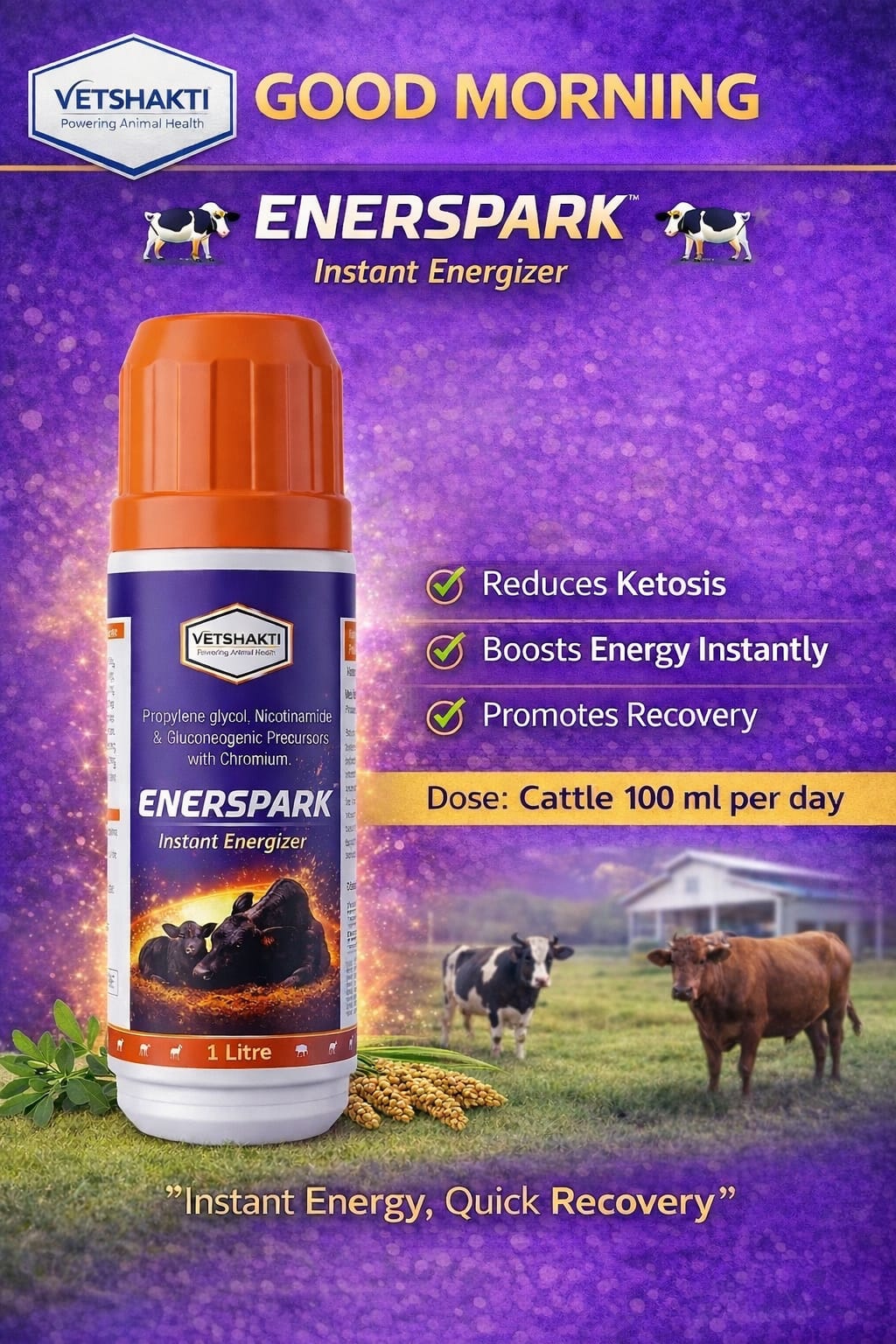
A rapid metabolic support formula can help restore balance quickly by improving glucose availability and supporting liver metabolism.
Key Nutritional Components That Support Recovery
Propylene Glycol – Instant Energy Support
Propylene Glycol acts as a gluconeogenic precursor, helping the liver produce glucose quickly.
Benefits:
✔ Fast energy supply
✔ Supports blood glucose level
✔ Helps reduce ketosis risk
✔ Improves recovery after calving
Nicotinamide (Vitamin B3) – Metabolic Booster
Vitamin B3 supports energy metabolism and liver function.
Benefits:
✔ Better fat metabolism
✔ Improved energy conversion
✔ Supports healthy liver activity
Chromium & Essential Minerals – Metabolic Efficiency
Minerals help improve nutrient utilization and glucose metabolism.
Benefits:
✔ Better feed efficiency
✔ Improved metabolic response
✔ Supports body energy balance
Vitamin B12 & Essential Oils – Appetite & Recovery Support
These nutrients help stimulate metabolism and improve feed intake.
Benefits:
✔ Better appetite
✔ Faster recovery
✔ Improved vitality
✔ Better milk performance
How Nutritional Energy Support Works
A complete energy recovery program helps:
✔ Provides quick usable energy
✔ Supports glucose synthesis in liver
✔ Reduces ketone body formation
✔ Improves appetite and feed intake
✔ Supports liver metabolism
✔ Restores energy balance faster
✔ Improves milk production recovery
Recommended Feeding
Buffalo & Cattle:
100–200 ml daily (or as directed by a veterinarian based on condition and production stage).
Benefits of Managing Energy Deficiency Properly
When energy balance improves:
✅ Higher milk yield
✅ Better body condition
✅ Improved appetite
✅ Reduced ketosis risk
✅ Faster post-calving recovery
✅ Better fertility performance
✅ Stronger immunity
✅ Higher farm profitability
Final Conclusion
Strong energy metabolism = Healthy liver = Better milk = Faster recovery = Higher profit
Managing ketosis and energy deficiency is essential for modern dairy farming. With timely nutritional support, glucose precursors, mineral balancing, and metabolic management, dairy animals can recover faster, produce more milk, and maintain long-term productivity.
Healthy energy balance creates healthier, stronger, and more productive dairy animals.